Hidden in Plain Sight: How State Grant Programs Are Quietly Distributing Billions to Overlooked Organizations
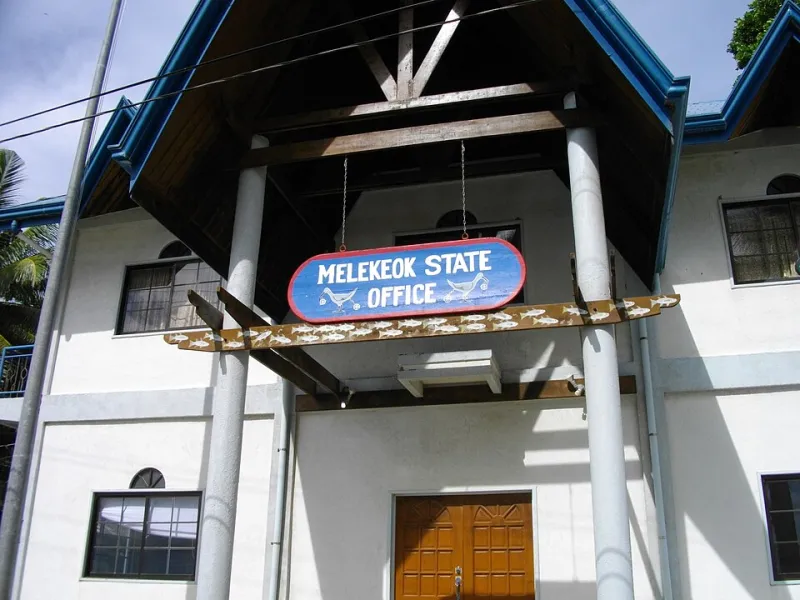
Photo: Abasaa, Public domain, via Wikimedia Commons
The conventional wisdom in the nonprofit funding world runs something like this: pursue federal grants through Grants.gov, cultivate foundation relationships, and supplement with corporate giving. It is a reasonable framework—but it leaves an enormous amount of money on the table.
State governments collectively administer programs that distribute well over two billion dollars annually through mechanisms that rarely surface in the databases most grant seekers rely upon. These programs are not secrets, exactly. They are simply quiet. They live in agency budget footnotes, legislative earmarks, and block grant sub-allocations that require a different kind of research discipline to uncover. For organizations willing to do that work, the rewards are substantial—and the competition is often remarkably thin.
Why State-Level Funding Flies Under the Radar
The gap begins with infrastructure. Federal grants are centralized through Grants.gov and agency-specific portals, making them discoverable through keyword searches. State programs, by contrast, are distributed across dozens of individual agency websites, legislative budget documents, and administrative rule filings. There is no single state equivalent of Grants.gov that aggregates opportunities across all departments.
Compounding this, many state programs are funded through federal block grants—lump-sum federal allocations that states then redistribute according to their own priorities and eligibility rules. The Community Development Block Grant (CDBG) program, administered by the U.S. Department of Housing and Urban Development, is one of the most prominent examples. States receive CDBG funds and allocate them through their own competitive processes, with eligibility criteria and award amounts that vary dramatically from one state to another. A nonprofit that qualifies for CDBG funding in Ohio may not qualify under Texas rules—and neither organization would necessarily encounter the other's opportunity in a standard federal database search.
Five States With Notable Hidden Funding Mechanisms
California — The California Arts Council and Creative Economy Grants Beyond the well-known NEA pass-through programs, California's Arts Council administers its own competitive grant portfolio that includes the Organizational Development grants program. Awards typically range from $5,000 to $100,000, and the program explicitly prioritizes organizations with annual budgets under $1 million—a threshold that makes smaller nonprofits more competitive, not less.
Texas — Governor's Commission for Women and Specialty Loan-Grant Hybrids Texas administers several funding mechanisms through its Health and Human Services Commission that blend grant and loan structures. These hybrid instruments are rarely flagged by grant researchers who filter strictly for traditional grants, yet they offer non-repayable components that function identically to grant awards for qualifying organizations.
New York — Empire State Development Grants for Workforce Programs New York's Empire State Development office administers discretionary workforce and economic development grants that are frequently announced through press releases and legislative notifications rather than formal RFP processes. Organizations with workforce training components—even those not primarily workforce-focused—often qualify under broadly written eligibility language.
Colorado — Colorado Health Foundation and State-Matched Funding Pools Colorado operates a unique matching fund mechanism through its Department of Local Affairs (DOLA) that matches locally raised dollars with state appropriations. Organizations that have already secured some private funding can effectively double their award by applying through DOLA's matching programs—a leverage opportunity that most out-of-state funders would never structure.
Michigan — Michigan Economic Development Corporation's Community Grants Michigan's MEDC administers place-based community grants that extend well beyond economic development in the traditional sense. Arts organizations, food access nonprofits, and environmental groups have all received awards under programs nominally categorized as economic development—because Michigan's eligibility language connects quality-of-life initiatives to economic vitality.
The Eligibility Advantage Smaller Organizations Often Miss
One of the most consistent findings across state-level programs is that smaller organizations are frequently better positioned than larger ones—not despite their size, but because of it. Many state programs include explicit set-asides or scoring preferences for organizations with smaller operating budgets, newer program histories, or geographic service areas in underserved regions. Federal programs, by contrast, often reward organizational scale and administrative capacity in ways that disadvantage emerging nonprofits.
State program officers also tend to be more accessible than their federal counterparts. A phone call to a state agency program manager before submitting an application is not only acceptable in most cases—it is encouraged. That conversation can clarify ambiguous eligibility criteria, surface unpublicized technical assistance resources, and signal to the program officer that your organization is engaged and prepared.
A Framework for Discovering Similar Programs in Your State
The process of uncovering state-level funding opportunities requires a systematic approach rather than a one-time search. Begin with your state's official budget documents, which are typically published annually and include line-item appropriations for grant programs. These documents are often dense, but searching for terms like "competitive grants," "community awards," or "subgrant" within the PDF will surface relevant programs quickly.
Next, map the agencies that are most relevant to your organization's mission and visit each agency's website directly. Look not just for current funding announcements but for prior-year grant recipients—many state agencies publish award lists that reveal the scale and distribution of their programs. If an agency awarded 30 grants last year averaging $40,000 each, that is a program worth tracking.
Finally, connect with your state's nonprofit association. Organizations such as the California Association of Nonprofits or the Texas Association of Nonprofits often maintain curated funding alert services and have direct relationships with state agency staff. Their intelligence networks can surface opportunities weeks before formal announcements.
Timing and Positioning Your Application
State grant cycles do not always align with federal or foundation calendars. Many state programs operate on fiscal years beginning July 1, with application windows opening in the preceding spring. Others are tied to legislative sessions and may open with little advance notice following a budget vote. Building relationships with program officers—and monitoring agency newsletters and legislative tracking services—provides the early warning necessary to submit competitive applications.
Position your application by aligning your organization's language with the state's own strategic priorities. Review the governor's executive budget message and relevant agency strategic plans. When your proposal reflects the state's stated goals back to reviewers in concrete, programmatic terms, it demonstrates both alignment and sophistication—qualities that distinguish competitive applicants from those simply seeking any available dollar.
The organizations consistently winning state-level grants are not necessarily the largest or the most established. They are the ones that did the research, made the calls, and showed up prepared. In a funding landscape where most of your peers are looking in the same direction, turning your attention toward state programs may be the most strategic decision your organization makes this year.